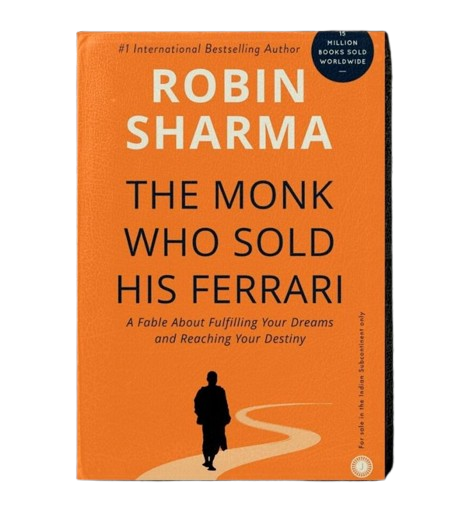
The Monk who sold his Ferrari
Robin Sharma
The Monk Who Sold His Ferrari by Robin Sharma explores the idea that external success, when pursued without inner balance, often leads to emptiness. Presented as a fictional narrative, the book follows Julian Mantle, a highly successful lawyer whose relentless pursuit of wealth and status results in a health crisis. This turning point pushes him toward a transformative journey in search of meaning, self-discipline, and inner peace.
The book introduces its philosophy through a series of symbolic lessons learned from Himalayan monks. These lessons emphasize mastery of the mind, clarity of purpose, disciplined habits, and the importance of aligning daily actions with long-term values. Rather than presenting complex theories, Sharma uses metaphors and storytelling to communicate ideas related to focus, self-control, and personal growth. The simplicity of the language makes the lessons accessible, even if they occasionally feel repetitive.
A central theme of the book is the power of the mind. The author stresses that thoughts shape outcomes and that controlling one’s inner dialogue is essential for sustained success. Techniques such as visualization, positive thinking, and structured routines are presented as practical tools for achieving both professional excellence and personal fulfillment. The book also highlights the importance of nurturing physical health, emotional stability, and meaningful relationships as integral components of a balanced life.
Another key message is the importance of purpose-driven living. The narrative encourages readers to identify what truly matters to them rather than blindly following societal definitions of success. By slowing down and reflecting, the book suggests that individuals can design lives that feel intentional rather than reactive. Time, energy, and attention are portrayed as valuable resources that should be invested wisely.
While The Monk Who Sold His Ferrari is motivational in nature, it is not deeply analytical. Its strength lies in inspiration rather than intellectual rigor. Some ideas may feel idealistic, and the narrative occasionally simplifies complex life challenges. However, this simplicity also makes the book effective as an entry point into self-reflection and habit-building.
Overall, The Monk Who Sold His Ferrari serves as a reminder that true success is holistic. It encourages readers to balance ambition with awareness and productivity with peace. The book works best as a mindset reset, prompting readers to pause, evaluate their priorities, and pursue growth that extends beyond material achievement.